
Prune Recoules’ ECHR Experience as Nicolas Bratza Scholar 2025
Prune Recoules, recipient of the Nicolas Bratza Scholarship, reports on her time in Strasbourg at the European Court of Human Rights.
It gave me insight into the work required to ensure that human rights remain practical and effective amid increasing political pressures on the Convention system. If you are interested in seeing how the Court pursues this mission through its judicial and diplomatic activities, I would strongly encourage you to apply.
Prune Recoules
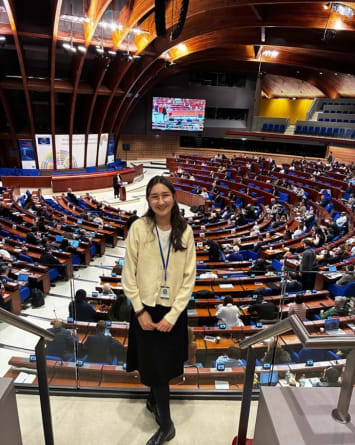
In May 2025 I was fortunate to be awarded the Lincoln’s Inn Nicolas Bratza scholarship, allowing me to undertake a traineeship at the European Court of Human Rights (ECHR). I was attached to the President’s Office under the supervision of Rachael Kondak, former Peter Duffy scholar, and supported the work of President Mattias Guyomar.
One of the biggest initial challenges – beyond countless hours trying to find a flat with my co-scholar Zoe ahead of our move in September – was to explain to my family and friends that the Court is the judicial organ of the Council of Europe, not the EU, and that Strasbourg is in France, not Germany. This early experience rectifying misconceptions represented a low-stakes preview of the bigger challenge of judicial communications – a key part of the work of the President’s Office.
Working at the Court
Working with the President’s Office allowed me to be immersed in the diplomatic function of the Court. The first part of my traineeship was characterised by a spirit of celebration: on 4 November 2025, the Convention turned 75 years old, and this provided an opportunity to reflect on its adaptability and achievements. In this regard, I had the opportunity to attend the Solemn Ceremony held to commemorate the Convention’s anniversary, alongside an evening at the Opera organised by the Presidency of Malta and a film screening of Costa-Gravas’ film Z.
The 75th anniversary brought its fair share of work for the President’s Office and its trainees, with events organised for diverse audiences ranging from legal experts to the wider public. For the former, I helped to draft speeches for a conference on the best interests of the child in Malta and for the exchange of views between the Court and the Committee for the Prevention of Torture. For the latter, I helped to organise a moot for a local school at the Court. 2025 also marked the 25th anniversary of the EU Charter of Fundamental Rights, and in this respect I assisted with drafting a speech for Vice-President Bårdsen’s intervention in Brussels and helped my supervisor to prepare for a panel discussion with MEP Helmut Brandstätter organised by the EU Delegation to the Council of Europe.
After the anniversary events, our attention turned to the Opening of the Judicial Year 2026. I assisted with research and preparation for the President’s Opening Remarks at the Judicial Seminar and the Opening Ceremony. The theme of the Ceremony was judicial solidarity, something I was able to see in practice when ushering judges from across Europe in the Human Rights Building and helping the Public Relations team to create a video montage of their messages. One memorable highlight of the day was meeting Sir Nicolas Bratza and discussing the quality of British advocacy.
Beyond these landmark events, my work included assisting in the preparation of speeches for the Fourth International Human Rights Forum, writing briefing notes ahead of high-level meetings, helping to draft academic articles including the Joint Law Report between regional human rights courts, and assisting in preparation for interviews as part of the President’s judicial communications strategy. I particularly enjoyed briefings for meetings between the President and UK officials including the Attorney-General, the Minister of Justice, and senior judiciary. In this regard, I was able to sit in on a roundtable between Lord Justice Singh, Mr Justice Picken, and the UK unit.
Alongside my work for the President’s Office, I was able to learn more about the judicial function of the Court by:
- Attending two Grand Chamber hearings, Grande Oriente d’Italia v. Italy (concerning the search of a Masonic association’s premises) and Kuijt v. the Netherlands (regarding the practice of reservist judges)
- Listening to the handing-down of the Grand Chamber judgments in Tsaava and Others v. Georgia (concerning police violence during the dispersal of protests) and Danileţ v. Romania (on the freedom of expression of judges)
- Sitting in on a Section meeting.
Towards the end of my traineeship, I also had the opportunity to work with the UK case-processing unit. There, I helped UK lawyers with drafting Single Judge notes on admissibility and completing checks under Rule 47 on applications on issues including family reunification outside the immigration rules, Court of Protection proceedings, eligibility for an Irish pension scheme, the rights of lawyers in Scotland, and refusal of planning permission. This offered a closer view of what the Convention represents to applicants and enabled me to focus on specific domestic issues in a way that complemented my work on the UK briefings.
Solidarité entre stagiaires
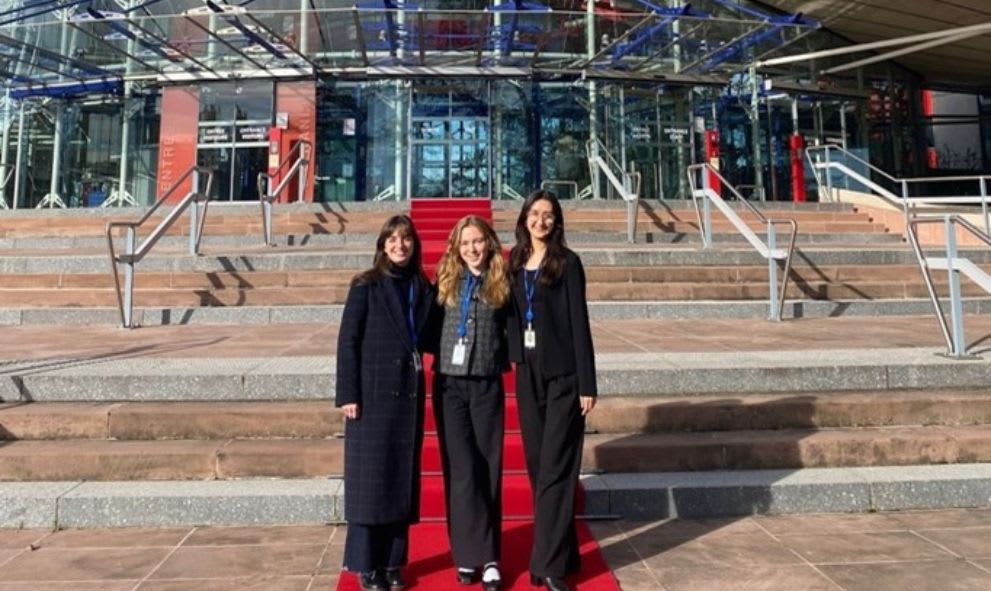
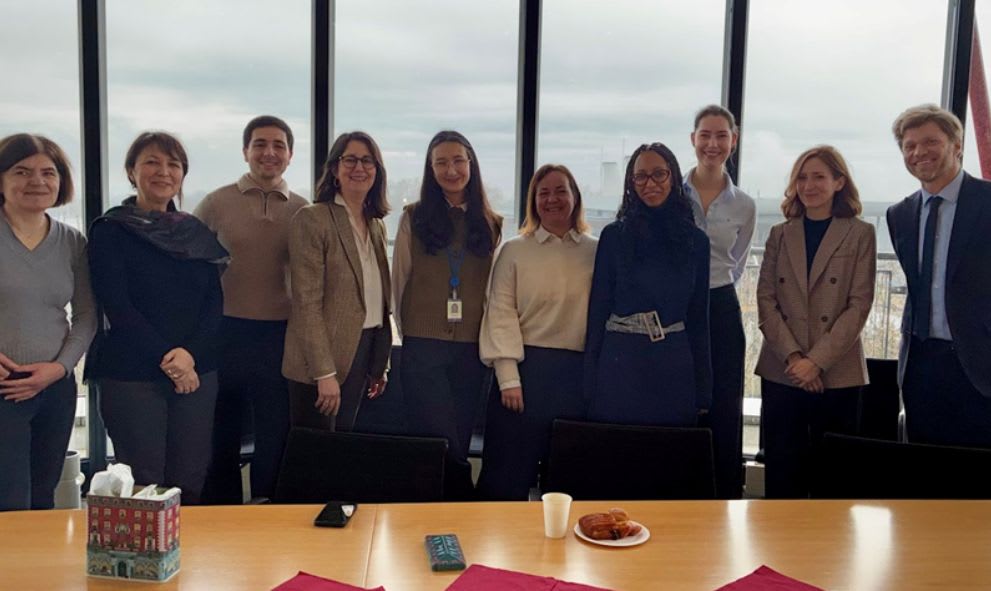
My traineeship was marked by a deep sense of community between trainees and study visitors – what a fellow French trainee and I called solidarité entre stagiaires. Together, we attended events across the Council of Europe including:
- The launch of Commissioner O’Flaherty’s book concerning Roma and Traveller rights
- The World Forum for Democracy
- A lecture by Lord Sales on customary international law
- A panel on the gendered impact of disinformation
- Receptions at the residences of British Ambassador Sandy Moss OBE and French Ambassador Pap Ndiaye.
Beyond the Council of Europe, we also built a sense of community through:
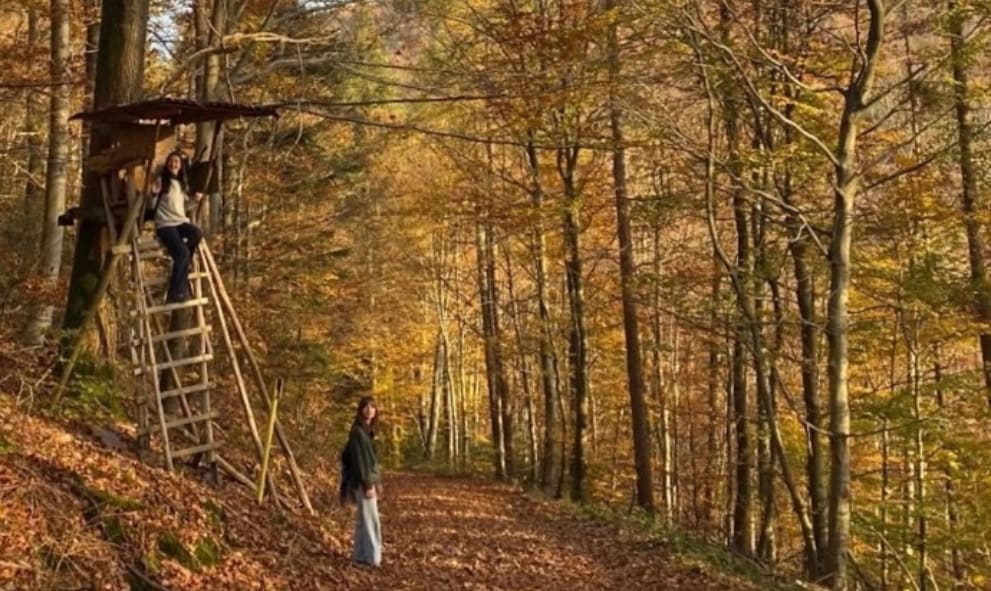
- Navigating our way through the Black Forest
- Visiting nearby towns (Colmar, Ribeauvillé, Basel, and Heidelberg)
- Taking full advantage of museums being free every first Sunday of the month
- Fighting our way through the Strasbourg Christmas markets.
Strasbourg was overall a lovely place to live, with architecture including charming Alsatian houses and the famous Strasbourg Cathedral, but also the spaceship-looking Court and EU Parliament. I was particularly pleased with the abundance of boulangeries, cafés, pottery-painting activities, and of course, the very short commuting times.
Conclusion
I am grateful to the kind and welcoming registry staff with whom I shared enlightening conversations on topics ranging from racial discrimination and identity-building to the moon landing. Above all, I am most grateful to the team at the President’s Office for welcoming me and guiding me through the life cycle of a speech with patience and pragmatism.
My time in Strasbourg taught me to enjoy coffee and improved my legal French but, more importantly, it gave me insight into the work required to ensure that human rights remain practical and effective amid increasing political pressures on the Convention system. If you are interested in seeing how the Court pursues this mission through its judicial and diplomatic activities, I would strongly encourage you to apply.